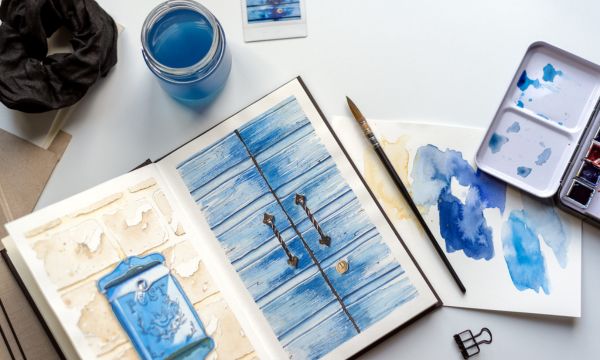
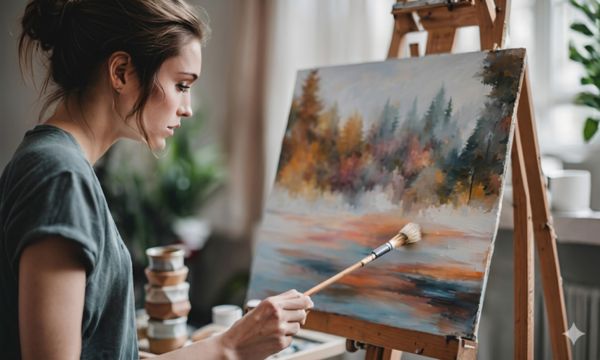
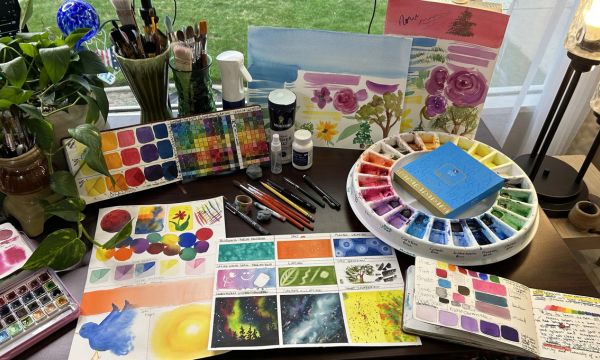
Using a limited palette can completely transform the way you paint.
Anúncios
Improving your painting doesn’t require more materials, using a limited palette is a simple shift that can transform your artistic results.
You start seeing color differently, understand mixing better, and create artworks that feel more harmonious and intentional.
And here’s the most interesting part: the fewer colors you use, the more your painting evolves and improves over time.
It may sound counterintuitive at first, but once you experience it, it starts to make complete sense.
What Changes in Practice When you Reduce your Palette
When you reduce your palette, something changes immediately: you start to think more before painting.
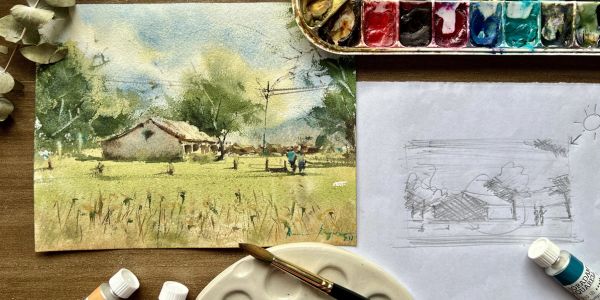
Instead of reaching for a ready made color, you now need to create, mix, and test your tones.
This naturally develops a more sensitive eye for color, helping you better understand how colors interact with each other.
Another important point is visual harmony.
Since all the colors come from the same base tones, the painting becomes naturally more balanced, and everything feels connected.
There is a sense that all elements “belong together”, which creates a more cohesive final result.
In addition, you gain much more control over your colors and over the outcome of your work.
Classic Palettes that Always Work
There are some combinations that are practically foolproof when it comes to a limited palette.
One of the most well-known is the palette with three primary colors:
- Blue
- Red
- Yellow
With just these three, you can create almost every other color through mixing.
Another very popular option is:
- Ultramarine blue
- Burnt sienna
- White
This combination produces incredible and natural tones, especially for landscapes and portraits, making everything look more harmonious and unified.
These palettes work because they create visual unity and coherence throughout the entire painting.
You are no longer overwhelmed by too many choices, you begin to work within a more organized and intentional system.
How to Create Variations with Few Colors
Here is where the magic of the limited palette really happens.
Even with just a few colors, you can create a huge variety of tones, and everything depends on how you mix them.
Here are some practical ways to explore this:
- Mix more blue with yellow to create different variations of green
- Add small amounts of red to neutralize colors and make them look more natural
- Adjust the amount of paint to work with proportion and intensity
- Use water or white (depending on your medium) to create variations in value
- Test different combinations to understand how colors react together
The secret lies in exploring proportion, intensity, and experimentation.
Over time, you begin to predict the results before even mixing, which is a huge step forward.
And that’s when your level really improves, because you start making decisions with more confidence and control.
Exercises to Train your Eye and Mixing Skills
If you want to improve quickly in painting, you need to practice with consistency and intention.
But it doesn’t have to be complicated, simple exercises can bring great results when done with attention.
Here are a few exercises that make a big difference:
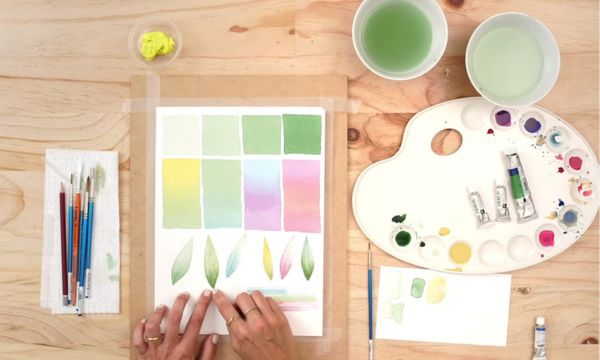
- Create a color scale by gradually mixing two colors
- Reproduce an image using only three colors
- Practice gradual mixing to understand smooth transitions
- Paint the same object using different limited palettes
These exercises develop your control and perception, making your painting more conscious and precise.
And the best part: you begin to gain more confidence in your process with each attempt.
That insecurity of “will this work?” slowly fades away, replaced by confidence and autonomy.
Common Mistakes When Painting with Few Colors
Even though it is a simple technique, there are some very common mistakes that can limit your results.
One of them is not mixing enough, ending up using colors almost straight from the tube.
Many people also fail to explore combinations, which greatly reduces the potential of the painting.
Another frequent mistake is overusing water or white, leaving everything washed out and lacking strength.
Here, balance is essential to maintain the richness and vibrancy of colors.
It is also common to skip planning the painting, even when working with fewer colors.
You still need to think about composition, values, and contrast.
How to Apply a Limited Palette in Watercolor
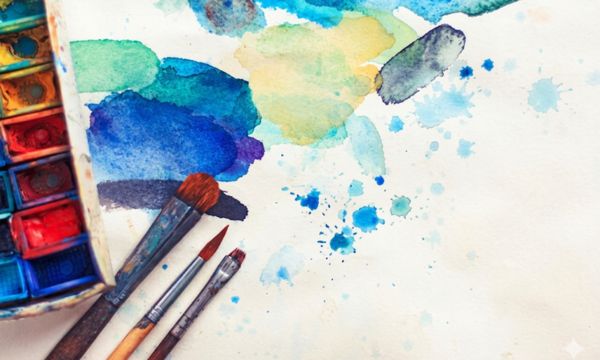
Using fewer colors helps keep your painting clean, light, and organized, without unnecessary excess.
You avoid that muddy look that appears when there is too much color mixing happening at once.
Another big advantage is the visual consistency throughout the painting.
The colors feel more connected, creating a result that is smoother, more harmonious, and more pleasing to the eye.
In watercolor, less really is more, and this makes a huge difference in the final result.
Start with two or three colors and explore their possibilities as much as possible before adding new ones.
You’ll be surprised by how much you can create with so little.
When to Use a Limited Palette (and When not to Use it)
A limited palette is powerful, but it is not an absolute rule.
It works very well in some situations, and less effectively in others.
Take a look at this comparison:
| When to use a limited palette | When to use more colors |
|---|---|
| Studies and practice | Highly detailed works |
| Search for harmony | Illustrations with many variations |
| Learning color mixing | Projects with specific colors |
| Minimalist paintings | Highly realistic art |
The most important thing is knowing how to choose based on your goal and the result you want to achieve.
Using fewer colors is not always enough, especially for more complex or detailed work.
But when used correctly, a limited palette can elevate your art, bringing more harmony, control, and visual impact.
Conclusion: Fewer Colors, More Impact in your Art
When you start working with a limited palette, you realize it goes far beyond a simple technique.
It becomes a way of seeing painting in a more conscious and intentional way, understanding each choice more deeply.
You begin to observe more carefully, mix with more purpose, and make more confident decisions.
Your art naturally becomes more balanced, expressive, and harmonious.
Over time, this approach transforms not only your results but also your relationship with painting itself.
If you want to keep improving and discovering new techniques, there is always more content waiting for you.